How is AI reinventing digital storytelling?
Summarize this article with:
In the second installment of our series "Storytelling through Design," this article explores the role of artificial intelligence in transforming raw data into clear, dynamic, and personalized narratives.
At Glanceable, we believe that the future of design isn't just about a smarter interface; it's built on a more human experience where data becomes action and automation enhances understanding.
Faster, Smarter, More Human Insights
Digital storytelling isn't limited to sleek interfaces or spectacular dashboards. It's about designing experiences that communicate with clarity, adapt in real-time and drive action.
At Glanceable, we use AI-powered storytelling to transform data into immersive and evolving narratives, designed to adapt to each user's context and needs.
With AI, storytelling moves beyond the rigid "one-size-fits-all" approach. It becomes interactive, predictive, and personalized, while helping users interact with information in a fluid, natural, and engaging way.
Design isn't just decoration. It's a direction.
At Glanceable, we don't design interfaces for their aesthetics, but for their clarity, their emotional impact and their Usability.
Every color, every shape, every layout choice is based on a simple principle: to help the user move from data to insight, and then from insight to action, with minimum friction.
Visual clutter hinders understanding. That's why we prioritize maximum visual clarity : clean, readable interfaces with explicit information hierarchies.
Clear labels, intentional iconography, and intuitive navigation allow the user to immediately understand what they see... and what they need to do next.
We apply systemic composition principles (hierarchy, repetition, balance, white space) to create layouts that reduce cognitive load.
Each screen is structured like a good story: it sets the scene, builds tension, then provides a clear resolution.
Large-scale personalization, thanks to AI
Every user deserves a story that resonates with them.
But true personalization at scale cannot be done manually. That's where AI comes in.
We use AI not only to adapt the appearance of content but especially to personalize how insights are delivered.
These are not generic dashboards with a name displayed at the top; these are contextual narratives that adapt in real-time to each user's role, needs, and usage patterns.
Example:
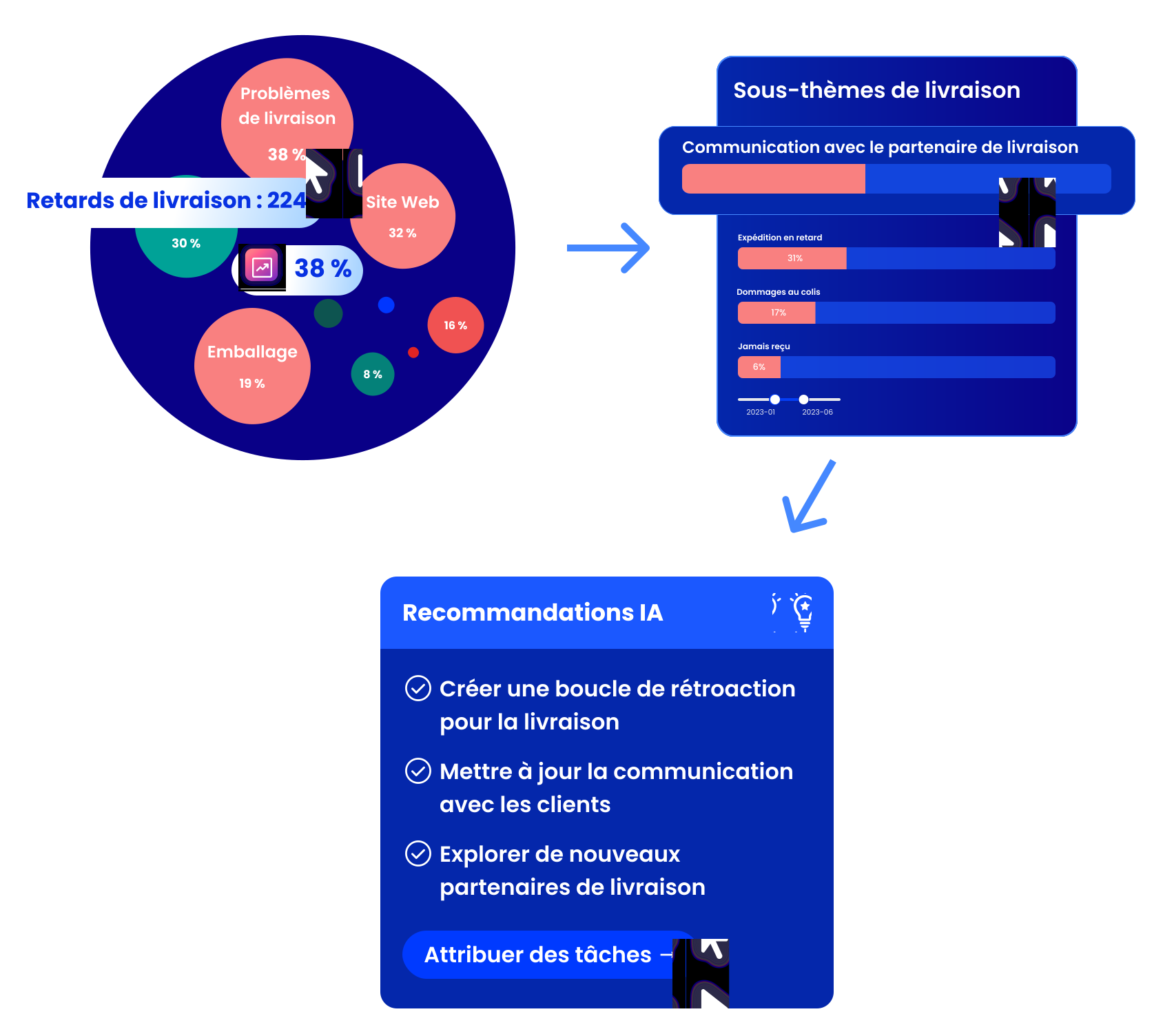
A CX Director opens Glanceable.
They see a dynamic bubble visualization representing the latest results of thethematic analysis.
One problem immediately stands out: complaints related to delivery delays are sharply increasing.
With one click, the user zooms in on the "delivery delays" bubble and discovers the root cause: most complaints are related to delays from logistics partners.
From there, Glanceable's recommendation engine GIO activates and suggests concrete, contextualized actions, such as:
- Update the FAQ and the support scripts
- Send proactive alerts via SMS or email
- Coordinate actions with logistics partners
That's the AI-driven UX storytelling : surfacing pain points, identifying causes, and proposing actionable recommendations as relevant as they are personalized.
The Glanceable Impact: where AI meets empathy
We believe that digital storytelling, combined with the speed and scale of AI, has the power to transform complex data into truly human-centered insights.
It's not just about telling stories better, but about telling the right stories, to the right people, at the right time.
Glanceable's design system, powered by AI and built on empathy, allows us to offer:
- Storytelling that is visually rich and meaningful
- Personalization that is intelligently contextual
- A seamless bridge between understanding and action
In a data-saturated world, we choose to focus on what truly matters: helping users gain clarity and make quick, informed decisions.
Curious to discover how AI-augmented storytelling can enrich your ? Check out the third and final episode of our series "Storytelling through Design."